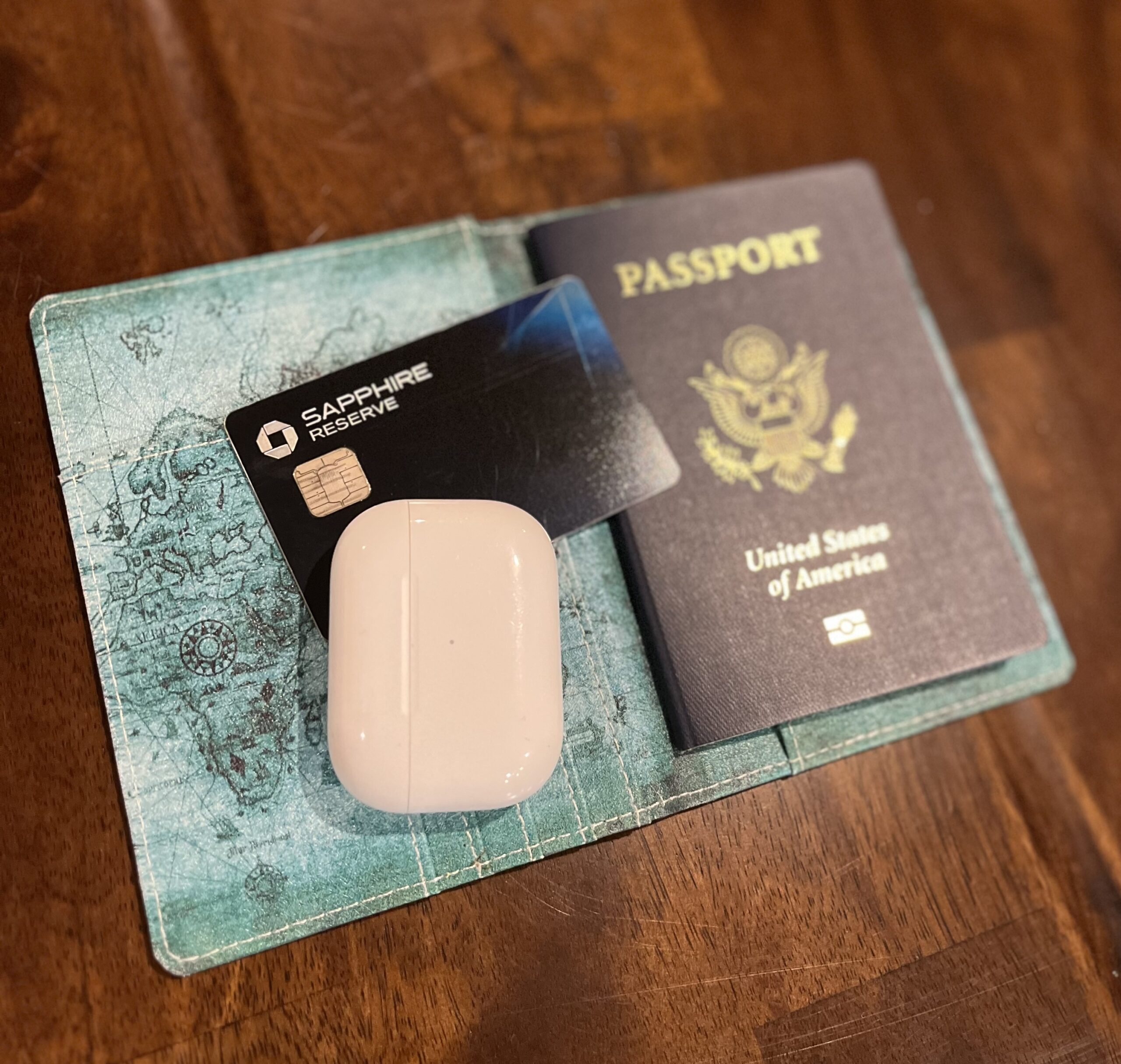
Why Caregivers Need to Travel — and How to Actually Make It Happen

The conversation goes like this: someone asks if I’ve traveled recently. I start to answer, then I catch myself. There’s this moment of calculation — can I say yes without sounding like I abandoned my responsibilities?
If you’re a family caregiver, you know this moment. The mental math you run every time someone mentions a trip. The guilt that shows up before you’ve even decided anything — uninvited, unhelpful, and apparently immune to logic.
I’m writing this from inside active caregiving, not looking back at it from a comfortable distance. My parent’s health changed overnight and I became a caregiver in the space of one conversation with a doctor. I still travel. I need to. And I want to talk about why — and how — because the narrative around caregiving and travel is mostly silence, punctuated occasionally by people saying “you’re so strong” when what you actually need is a flight and three days with no one asking you where anything is.
The Guilt Is Real and It Lies to You
The guilt of wanting to take a trip while caring for someone who depends on you is specific and heavy. It feels selfish in a way that doesn’t respond well to logic. You can know intellectually that you need rest. You can read every article about caregiver burnout. You can send yourself that “put your oxygen mask on first” meme approximately forty-seven times. The guilt doesn’t care.
Here’s what I’ve learned: the guilt is not proportional to the actual impact of you being gone for a few days. What it is proportional to is how depleted you already are. When you’re running on empty, everything feels catastrophic — including the idea of leaving.
The solution isn’t to power through the guilt like it’s a character flaw. The solution is to build the systems that make going away actually safe — so the guilt loses its leverage because you’ve genuinely addressed the underlying concern. We’ll get to those systems. First, let’s talk about what happens if you don’t.
What Caregiver Burnout Actually Looks Like
Caregiver burnout doesn’t announce itself. It doesn’t send a calendar invite. It just quietly accumulates until one day you’re standing in the pharmacy at 6pm crying because they’re out of your loved one’s specific brand of antacid and you cannot handle one more thing.
It looks like: not being able to remember the last time you did something purely for yourself. It looks like resenting the person you’re caring for — and then immediately feeling terrible about the resentment, which is its own kind of exhausting. It looks like your own doctor appointments getting pushed back indefinitely because there’s always something more urgent. It looks like answering “how are you doing?” with “fine” because explaining the truth would take thirty minutes and you don’t have thirty minutes.
Travel is not the only answer to burnout. But it is a powerful one — because it’s complete physical removal from the environment. You cannot be half-present on a trip the way you can be half-present in your own home, refreshing the group chat every twenty minutes. A trip forces a real separation, and that separation is what allows actual recovery.
How to Set Up Coverage Before You Go
This is the practical part — the thing that makes the trip possible rather than just aspirational.
Start earlier than you think you need to. Coverage for a 4-day trip should start being arranged 3–4 weeks in advance, not the Tuesday before you leave. The people in your care network have lives. They need real notice, not a panicked text that says “any chance you could help out this weekend?”
Write down the full care picture. Before you can ask someone to cover for you, you need a document that captures: medications and timing, doctor contacts, insurance information, emergency procedures, what a typical day looks like, and what to do if something goes wrong. This is exactly what the Caregiver Organizer Kit was built for — having this ready means handing off care doesn’t require a two-hour briefing call where you realize halfway through that you’ve never actually written any of this down.
Identify your coverage network. Who can step in? Be honest with yourself here. Other family members, friends, professional home health aides, adult day programs, respite care services. Your local Area Agency on Aging can connect you with resources — many free or low-cost. Call 1-800-677-1116 to find your local office.
Do a test run first. Have your coverage person handle a full day before you travel overnight. Find the gaps in your handoff notes before you’re at 30,000 feet wondering if you told anyone about the medication that has to be taken with food.
Brief them on the non-obvious things. Medications are obvious. Less obvious: what TV shows your loved one likes, what time they prefer to wake up, what upsets them, what comforts them. The care isn’t just medical. Leave instructions for the whole person — not just the clinical version.
What to Pack for Peace of Mind
Caregivers travel with a specific kind of anxiety that regular packing lists don’t address. Here’s what actually helps:
A laminated emergency one-pager. A single printed page with all critical information — allergies, medications, emergency contacts, insurance numbers, doctor contacts — posted visibly in your loved one’s home. This is what first responders need if something happens while you’re gone. We have a free printable version at theboujeeduck.com/caregiving. Print it. Laminate it. Post it on the fridge like the responsible adult you absolutely are.
A group text with a daily check-in structure. Set up a thread with your coverage person and at least one other family member before you leave. Agree on a time. One message, once a day: “All good.” That’s it. No novels. No updates unless something actually changes. This simple structure does more for travel anxiety than anything else I’ve found.
A defined “come home” threshold. Before you leave, decide in advance what would actually bring you home early. Not the vague fear that something might go wrong — a specific threshold. Otherwise your depleted brain will be doing catastrophic math at 2am when your coverage person texts that your loved one seemed a little tired after dinner, which is not an emergency but will feel like one if you haven’t pre-decided what an emergency actually is.
Your own medical information. When was the last time you had a checkup? Caregivers are statistically more likely to neglect their own health. If you’re traveling, you might as well show up as a whole person.
Using Points to Remove the Cost Barrier
One of the reasons caregivers don’t travel isn’t just logistics — it’s money. Caregiving is expensive. It disrupts work. It creates financial pressure that makes spending money on yourself feel impossible, or at minimum, deeply uncomfortable.
This is where points change the conversation.
If you have credit cards — and most caregivers paying for medical supplies, prescriptions, home modifications, and care services are putting serious spend on cards — you are earning points whether you’re paying attention to them or not. The question is whether they’re working for you or just sitting there earning nothing.
A 3-day trip to a Hyatt property using Chase points. A domestic flight using Southwest Rapid Rewards from everyday spending. A weekend away that costs $68 in taxes instead of $800 in airfare. The points system isn’t just for people who travel for fun. It’s for people who need to travel for their mental health and don’t have an unlimited budget to do it.
Where to Go When You’re a Caregiver
The best trip for a caregiver isn’t necessarily the biggest or most adventurous. It’s the one that delivers the specific kind of rest you actually need.
If you need silence and zero decisions: A solo trip where meals are available, the environment is beautiful, and nothing is required of you. A spa resort, a mountain cabin, a Hyatt on the beach. The kind of trip where you can stare at the ocean for three hours and nobody needs anything and that is not a problem.
If you need joy and distraction: A city trip with a friend. New Orleans. Chicago. Lisbon. Somewhere with food and music and people and life happening loudly around you. The kind of trip that reminds you the world is large and vivid and you still belong in it — even if you’ve spent the last several months feeling like you mostly belong in a waiting room.
If you need connection: A group trip or a visit to someone who loves you and lives somewhere beautiful. Being with people who know you fully — not just the caregiver version of you — is its own kind of medicine.
If you need a quick reset: Even one night can break the loop. Drive two hours. Check into a nice hotel. Sleep past 7am. Eat somewhere good. Come home. You don’t have to go far for the separation to work.
What Happens When You Come Back
Here’s the thing nobody talks about: coming back from a trip as a caregiver is different from coming back without those responsibilities. There’s a re-entry. The situation you left will be exactly as you left it. Caregiving doesn’t resolve itself while you’re gone. You return to the same challenges, the same logistics, the same emotional weight.
But you return to it differently. That’s the whole point.
The annoyance that had become a daily source of resentment is somehow more tolerable. The exhaustion has a floor again instead of a bottomless drop. You remember why you’re doing this because you’ve had space to actually miss the person underneath the care — not just manage them.
Taking care of yourself is not a luxury add-on to caregiving. It’s part of what makes long-term caregiving possible. And travel — even small, even cheap, even just two days in a hotel two hours away — is one of the most effective ways I know to do it.
Start Here if You’re a New Caregiver
If you’re in the early weeks and feeling overwhelmed before you can even think about a trip — start with the free First 30 Days Checklist. It’s the week-by-week guide I wish someone had handed me on day one, before I figured out through trial and error what actually needed to happen first.
Download the free First 30 Days Checklist →
And if you’re ready to get organized — emergency binder, medication log, doctor visit prep, care team contacts, and a self-care check-in that is genuinely for you — the Caregiver Organizer Kit has everything in one printable PDF.
Get the Caregiver Organizer Kit →
You deserve to take the trip. Let’s make it possible.
The Boujee Duck covers caregiving, travel, and real life — written from inside the experience. Visit theboujeeduck.com/caregiving for free resources and tools.