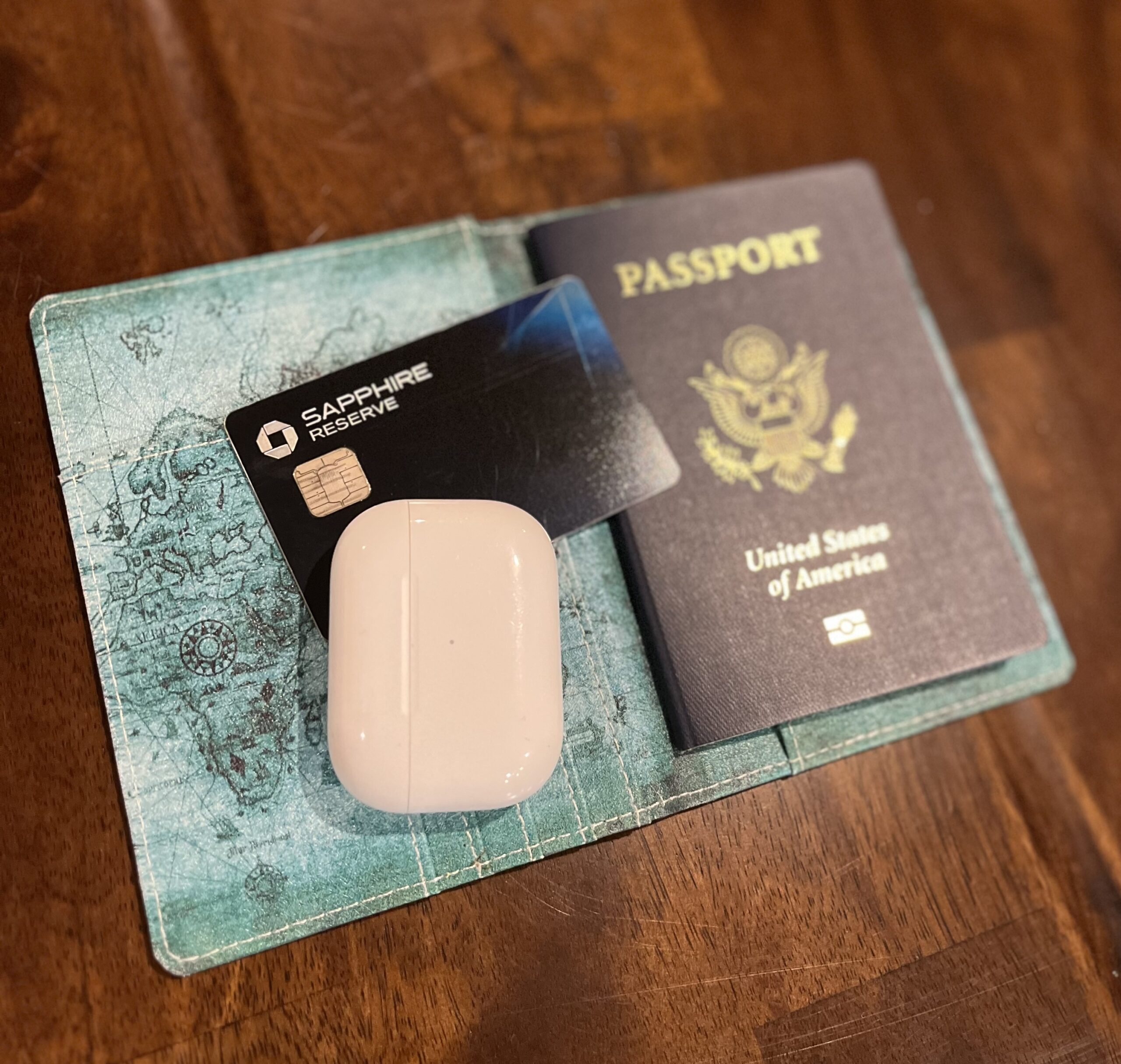

I need to say something that most personal finance content refuses to say out loud: waiting until you’re debt-free to enjoy your life is not a strategy. It is a bet. A bet that your willpower is unlimited, your circumstances won’t change, nothing unexpected will happen, and you’ll still want the exact same things you’re waiting for by the time you finally get there.
That is a lot of faith to place in a future version of yourself who may have completely different priorities, a different body, different people in their life, and a deep personal relationship with their couch that you did not anticipate developing.
I was carrying between $10,000 and $30,000 in debt when I booked my first international trip using credit card points. That sentence makes some people genuinely uncomfortable. I understand. But I want to explain what I actually did — because it wasn’t irresponsible, it wasn’t reckless, and it is not something I regret even slightly.
The Myth of Doing One Thing at a Time
There is a version of financial recovery advice that goes like this: first you eliminate all debt. Then you build an emergency fund. Then you invest. Then — and only then, as a reward for your years of joyless discipline — you enjoy your life.
The problem isn’t the destination. The problem is the framing that these things have to happen in sequence rather than in parallel. That you cannot make real progress on debt while also having experiences worth having. That deprivation is the price of discipline and also somehow the thing that will keep you motivated for years.
I have watched people abandon perfectly good debt payoff plans not because they didn’t understand the math but because they couldn’t sustain the sacrifice. Month after month of saying no to everything. Watching the balance shrink by what felt like millimeters. Living in some deferred version of their real life, waiting for a finish line that kept moving.
And then something happens. A birthday. A trip everyone else is going on. A spontaneous Friday that becomes a spontaneous weekend. The system breaks because the system had no room for being human.
The system I use doesn’t break. Because it was designed around the assumption that you are, in fact, a human being.
The Two-Track System — Run Both at the Same Time
Track 1: Attack the debt with a fixed, non-negotiable monthly payment. Avalanche method (highest interest first — mathematically optimal) or Snowball method (smallest balance first — psychologically powerful). Pick one. Automate the payment. Do not renegotiate with yourself every month about whether this is still the right number. The negotiation is over. The payment goes out. That’s the whole plan.
Track 2: Earn points from what you’re already spending. Not from new spending. Not from carrying balances. From the groceries, gas, subscriptions, and everyday expenses you’re paying for regardless. Run those purchases through a card that earns rewards, pay the card off in full every month, and let the points accumulate.
These two tracks run at the same time. They do not conflict with each other. The debt is being paid. The points are being earned. Both things are simultaneously true, which is the point.
What “Earning Points on Regular Spending” Actually Means
This is where most people’s eyes glaze over because travel rewards content is often written for people who already know what they’re doing and mainly want to feel validated. Let me be specific.
You do not need to spend more money to earn significant points. You need the money you’re already spending to go through a card that rewards you for it — and you need to pay that card off in full every month. That last part is non-negotiable. Carrying a balance on a rewards card means the interest charges will exceed the value of every point you earn. You will be paying to earn points that cost more than they’re worth. This is the opposite of the goal.
Here’s what a basic setup looks like in real numbers:
Groceries at $400 per month, run through a card that earns 3x on groceries, over 12 months = 14,400 Chase Ultimate Rewards points. From groceries. Just groceries. Add gas, subscriptions, dining, and other regular spending and a person with a normal budget can earn 50,000–80,000 points per year without increasing their spending by a dollar.
50,000 Chase UR points is a round-trip domestic flight, a multi-night Hyatt stay, or a meaningful international booking with the right routing. From putting your normal spending on a different card. That is the whole trick.
The bonus move most people completely miss: airline shopping portals.
Every major airline and hotel loyalty program has a shopping portal — essentially a browser gateway that sits between you and the stores you were already going to shop at anyway. You click through the portal to get to Target, Nike, Gap, Sephora, Best Buy, or hundreds of other retailers, and the program drops bonus miles into your account on top of whatever your credit card earns. We’re talking 2x, 5x, sometimes 10x or more miles per dollar on purchases you were making regardless.
Chase has the Chase Shopping portal. United has MileagePlus Shopping. American has AAdvantage eShopping. Delta has SkyMiles Shopping. Rakuten (which partners with Amex) gives you bonus Membership Rewards points and cash back at the same time. Most of these are free to join and take approximately four minutes to set up.
The math on this is almost embarrassing. You’re going to buy the thing anyway. Clicking through a portal first takes five extra seconds and drops bonus miles in your account. There is no downside. The only reason not to do it is not knowing it exists — which, now that you’re reading this, is no longer your situation.
Two tools make this effortless. First, each airline has its own browser extension — AAdvantage eShopping, United MileagePlus Shopping, Southwest Rapid Rewards Shopping — that pops up automatically when you’re on a participating retailer’s site and reminds you to click through. Install the one for your primary program and forget about it. Second, Cashback Monitor is a free comparison tool that shows you which portal is offering the highest rate at any specific store at any given moment — useful when you want to maximize value across all programs before a big purchase. Install it once. Collect miles forever. You’re welcome.
The Credit Score Section (Stay With Me — It’s Relevant)
Here’s the tension nobody addresses directly: most premium travel credit cards want a credit score of 700 or above. If you’re in active debt payoff, your score might be lower than that — particularly if high utilization on existing cards is dragging it down. This is real. Here’s how to handle it.
Utilization is your fastest lever. Credit utilization — the percentage of available credit you’re using — makes up 30% of your FICO score. Every dollar you pay toward credit card balances is simultaneously reducing your debt and improving your score. These are not two separate projects. They are the same project.
Do not close old accounts. The age of your credit history matters for your score. If you have old cards sitting at zero with no annual fee — keep them open. Closing them shortens your average account age, which can drop your score at the exact moment you’re trying to raise it.
One new card at a time. If your score is in the 680–700 range and you’re eyeing a travel card, apply for one. Not three. Multiple hard inquiries in a short window make lenders nervous and temporarily reduce your score, which is not what we’re going for here.
The realistic timeline: Starting from 650–670, most people reach 700 within 6–12 months of consistent on-time payments and utilization reduction. 740+ is typically 18–24 months. This is not fast. It is also not forever, which is a more useful way to look at it.
Broke to Boarding Pass has a 12-month credit score tracker that maps this journey from where you are now to the cards you’re targeting — with milestones so you can see progress instead of just waiting. Because a number on a journey feels very different from a number that’s just sitting there judging you.
The Fun Fund — The Part That Actually Saves the Plan
Every debt payoff plan that actually works long-term has one thing in common: it accounts for the fact that you are a human person with desires who will not sustain 24 months of saying no to absolutely everything.
The Fun Fund is a non-negotiable budget line. Before any discretionary spending decisions are made each month, a fixed amount — $50, $100, whatever your situation allows — is designated for something purely enjoyable. It doesn’t have to be large. It has to exist.
The psychological function of the Fun Fund is to eliminate the binary. With a Fun Fund, going to dinner with friends or buying the thing you want doesn’t mean you broke the plan. It was the plan. You are still on the plan. You are a person who is paying off debt and living their life, which turns out to be significantly more sustainable than a person who is paying off debt instead of living their life.
That distinction — and I cannot stress this enough — is what keeps people going for 24 months instead of 6.
The First Redemption — This Part Is Worth Waiting For
There is a specific moment in this process that I want you to know is real and coming.
At some point — maybe six months in, maybe a year — you’ll have enough points for something. A domestic flight. A Hyatt night in a city you’ve been meaning to visit. Maybe something bigger, if you’ve been strategic.
You’ll book it. You’ll pay the taxes. You’ll look at the confirmation email.
And you’ll realize that the debt is still there — you’re still paying it down every month, on schedule, as planned — and you also just booked a trip for $68 instead of $600. Both of these things are simultaneously true. The debt is not paused. The trip is not deferred. They are happening at the same time.
That moment changes something. Financial responsibility and enjoying your life stop feeling like opposites. They become two parallel tracks, both moving in the right direction at the same time.
That’s the system. That’s what I mean when I say you don’t have to wait.
The Honest Part — Because This Is That Kind of Blog
A few things this approach requires, stated plainly:
Paying credit cards in full every month. Without exception. If you are not there yet, start with that before adding any travel card to your wallet. The interest will always exceed the points. Always. There are no exceptions to this rule.
Not treating points as permission to spend more. The system works because the spending doesn’t change — only the card it runs through. Using points as psychological justification for new spending is a different situation entirely and not what we’re discussing here.
Patience with the score, the balance, and the timeline. There is no version of this that works in 30 days. There is a very real version that works in 12–18 months, which sounds like a long time until you’re 14 months in and you’ve paid down a significant chunk of debt and also been on two trips using points and your credit score is 40 points higher than when you started.
It works. And it lets you live while it’s working. Which, as far as financial systems go, is the whole point.
The Tools
If you want a structured system for running both tracks at once — debt payoff dashboard, 12-month balance tracker, credit score log, Fun Fund section, travel rewards runway — it’s all in Broke to Boarding Pass.
Broke to Boarding Pass — the debt payoff planner that doesn’t tell you to stop living →
If you want both the debt planner and the complete booking guide — the full system from paying down what you owe to using the points you earn along the way — the Full Stack Bundle has both, plus two bonus worksheets.
The Full Stack Bundle — save $17 when you get both →
You don’t have to choose between paying off debt and living your life. You can do both. The only question is whether you have a system for it.
The Boujee Duck covers debt payoff, credit card points, travel, and caregiving. More at theboujeeduck.com/points-money.