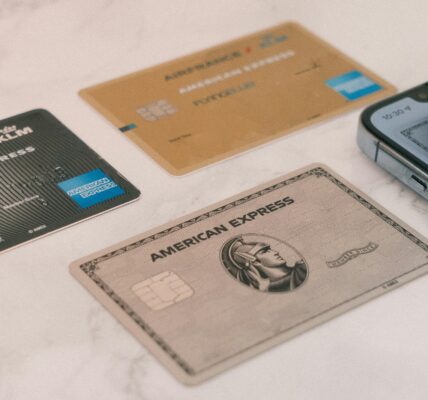

You have credit card points sitting in at least three different accounts right now. You know you do. You also have absolutely no idea what they’re worth or whether you should be doing something with them. You are not alone. This is basically everyone.
Here’s the problem: most people with rewards credit cards are earning points perfectly well and then — at the critical moment of actually using them — making decisions that destroy the value they spent months building. Cashing them out for statement credits at a penny per point. Letting them expire quietly like a forgotten houseplant. Redeeming for a $50 Amazon gift card with the same energy of finding a $100 bill and trading it for $20 because the $20 felt more tangible.
The difference between a $400 flight and a $68 flight is often not how much money you have. It’s knowing which program to use and when. Let me break this down in a way that will make you genuinely upset about your past redemptions — in the most productive way possible.
CPP: The Only Number That Actually Matters
CPP stands for cents per point. It is the single most useful metric in all of travel rewards and also the one most people have never heard of, which explains a lot.
The formula is almost insultingly simple:
Cash price ÷ points required = CPP
A flight costs $400. The same flight costs 25,000 points. $400 ÷ 25,000 = 1.6 cents per point. That’s decent — above average.
A hotel night costs $500. It costs 20,000 Hyatt points. $500 ÷ 20,000 = 2.5 cents per point. That’s excellent.
Emirates First Class to the Maldives costs roughly $8,000. It costs 85,000 Amex points transferred to Emirates Skywards. $8,000 ÷ 85,000 = 9.4 cents per point. That is nearly 10 times the value most people get from a statement credit, and it is one of the best redemptions available in the entire system.
The benchmark: above 1.5¢ is good. Above 2.0¢ is excellent. Below 1.0¢ — don’t do it. You worked for those points. They deserve better.
The 11 Major Programs Ranked — No Jargon, Just the Truth
Flexible Points Programs — These Are Your Most Valuable Assets
Chase Ultimate Rewards — Average value: 1.8–2.5¢
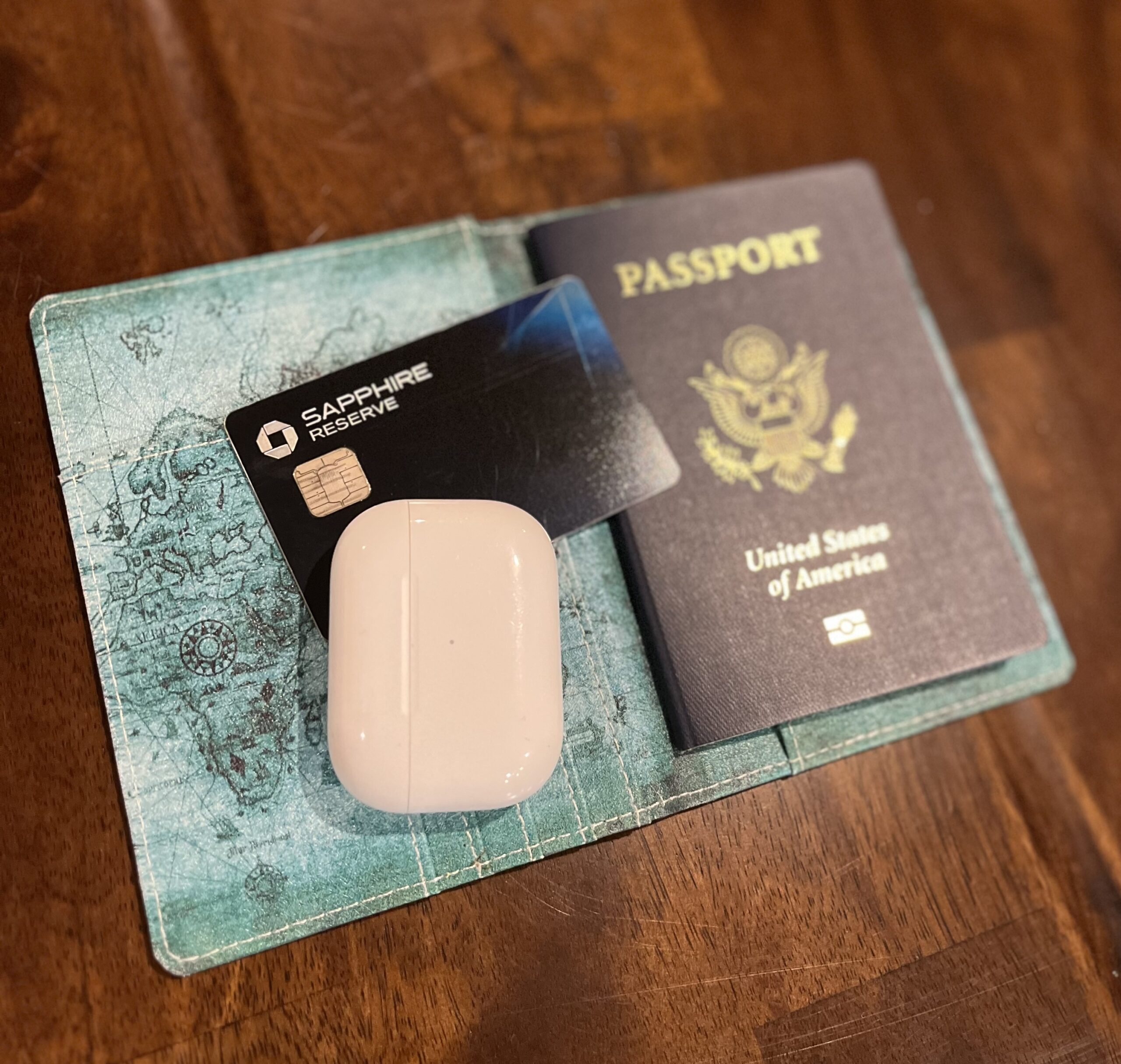
The most useful flexible currency in the US. Transfers to United, Hyatt, Southwest, British Airways, Air France/KLM, and more. The Hyatt transfer is the crown jewel — World of Hyatt properties often cost 12,000–30,000 points for nights that run $300–$500 in cash. Chase Sapphire Preferred and Chase Sapphire Reserve both earn UR points.
Best sweet spot: Transfer to Hyatt for luxury hotel nights. Park Hyatt and Alila properties consistently deliver 2.5¢+ per point.
Amex Membership Rewards — Average value: 1.8–2.2¢
Transfers to Delta, Air Canada, British Airways, ANA, Emirates directly, Air France/KLM, and many others. The ANA transfer for trans-Pacific business and first class is legendary — Japan to the US for 55,000–88,000 points when cash prices exceed $4,000. Also your ticket to Emirates First Class, as previously discussed.
Best sweet spot: Transfer to Emirates Skywards for First Class redemptions, or Air Canada Aeroplan for Star Alliance partners.
Citi ThankYou Points — Average value: 1.6–2.0¢
The most underrated program in this list. Transfers to Turkish Miles&Smiles, which has some of the lowest redemption rates for Star Alliance flights anywhere — including United domestic flights for as few as 7,500 miles. Most people overlook this entirely, which is a gift to the people who don’t.
Best sweet spot: Turkish Miles&Smiles for United flights. Genuinely one of the best domestic flight values available.
Capital One Miles — Average value: 1.5–1.9¢
Transfers to Air Canada Aeroplan and Turkish Miles&Smiles among others. Also works at 1.0¢ as a portal redemption — not exciting, but consistent. Better than a statement credit.
Best sweet spot: Transfer to Air Canada Aeroplan for Star Alliance partner awards.
Airline Programs — Know Your Sweet Spots
United MileagePlus — Average value: 1.4–1.8¢
Best for Saver awards on United and Star Alliance partners. The key is avoiding “Everyday” awards, which are dynamically priced and often terrible value. Saver only. Always.
Best sweet spot: International Star Alliance Saver awards when availability exists.
American AAdvantage — Average value: 1.5–1.8¢
British Airways Avios transfers to AAdvantage and shines on short-haul American flights — a 1–3 hour domestic flight for as few as 7,500 Avios. If you fly short American routes regularly, this is worth knowing.
Best sweet spot: Short domestic American flights via British Airways Avios.
Delta SkyMiles — Average value: 1.0–1.4¢
Delta uses dynamic pricing, which means the same route can cost wildly different amounts depending on demand, the phase of the moon, and what Delta had for breakfast. There are no fixed award charts. Useful for last-minute domestic flexibility when other programs are sold out.
Best sweet spot: Last-minute domestic bookings. Otherwise, manage expectations.
Southwest Rapid Rewards — Average value: 1.3–1.5¢
Consistent and predictable — Southwest pricing is tied directly to cash prices so you always know what you’re getting. The real value is the Companion Pass, which lets a designated person fly free with you for up to two years. If you can earn it, it effectively doubles every Southwest redemption you make.
Best sweet spot: The Companion Pass. Nothing else in domestic travel rewards comes close to this level of value.
Hotel Programs — One Clear Winner
World of Hyatt — Average value: 1.7–2.5¢
The best hotel loyalty program in the points world, and it’s not close. Hyatt’s award chart is still largely fixed — meaning you can calculate value before you book, which is a rare and beautiful thing. Category 1 properties start at 3,500 points per night. Park Hyatt properties — some of the best hotels in the world — cap at 45,000 points. Chase UR transfers to Hyatt 1:1, which is the combination that makes this work.
Best sweet spot: Park Hyatt, Andaz, and Alila properties. Cash rates of $400–$800 for 25,000–35,000 points. Do the math and then do the booking.
Marriott Bonvoy — Average value: 0.7–1.0¢
Marriott requires a significant number of points to produce good value, and the portfolio is inconsistent. The one genuine exception: the 5th night free benefit, where booking 4 nights on points makes the 5th automatically free, improving the effective CPP meaningfully. Outside of that specific use case, transfer the points to airlines or use Hyatt.
Best sweet spot: The 5th night free. Specifically and only that.
Hilton Honors — Average value: 0.4–0.6¢
I will be honest with you: Hilton points are not a great redemption vehicle for premium properties. The program requires enormous balances for what you get. The main benefit of Hilton status is room upgrades and breakfast inclusion, not point redemptions. Use Hilton points for lower-category properties or as a fallback when Hyatt isn’t available in your destination.
Best sweet spot: Budget-to-mid properties where you’d otherwise pay full price. Not the Park Hyatt competitor you might want it to be.
The Four Mistakes That Are Costing You Real Travel
1. Cashing out for statement credits. This is the points equivalent of selling a rare baseball card for a dollar because you needed a dollar. Chase, Amex, and Citi all let you apply points as statement credits at 0.5–1.0¢ per point. Flexible points that could be transferred for 2–3× that value should never, ever be cashed out. Repeat this to yourself until it sticks.
2. Transferring before confirming availability. Points transfers are instant, permanent, and non-reversible. If you transfer 80,000 Chase points to United and the award you wanted disappears before you book, those are now United miles forever. Confirm the seat first. Transfer second. Every single time.
3. Ignoring expiration. Most airline programs expire miles after 12–24 months of account inactivity. A single small purchase through the program resets the clock. Set a calendar reminder every 6 months to check your balances. Expiring miles are the saddest thing in travel rewards and entirely preventable.
4. Not knowing what you have. Points scattered across four to six different accounts, none of which you’ve logged into recently, none of which you’ve done the math on. This is the most common situation and also the most fixable. Which brings us to the audit.
The 15-Minute Points Audit You Should Do Today
Genuinely — today, this afternoon, after you finish reading this:
Log into every loyalty account you have. Airlines, hotels, credit card portals — all of them. Write down every balance. Multiply each balance by 0.015 to get a conservative estimate of what it’s worth in travel value. Identify which program has the most value and what it could actually book. Check expiration dates — anything expiring in the next 6 months needs your attention now, not later.
That’s it. Fifteen minutes. The results will either be exciting or mildly horrifying, both of which are useful.
If you want a structured worksheet for this — one that lists all 11 programs with CPP benchmarks, a fill-in audit table, and action cards for what to do with each program — it’s included free with the Full Stack Bundle.
Get the Full Stack Bundle — Points to Paradise + Broke to Boarding Pass + bonus worksheets →
Or if you want to go straight to the complete booking system:
Points to Paradise — the complete 5-step guide →
The Boujee Duck covers credit card points, debt payoff, travel, and caregiving — for real people who want to live fully. More at theboujeeduck.com/points-money.